

TL;DR
- NLP-driven trading signals generated from news and social media now influence an estimated 35% of institutional equity trades in the U.S., according to McKinsey.
- Bloomberg, LSEG (Reuters), and RavenPack dominate the institutional NLP market, while retail traders increasingly access similar capabilities through platforms like TradingView and StockTwits.
- The edge from basic sentiment scoring has eroded, pushing firms toward more nuanced NLP approaches including event extraction, causal reasoning, and multi-document synthesis.
Related Insight: China A-Shares: The Contrarian Opportunity in 2026
How Machines Read Financial Text
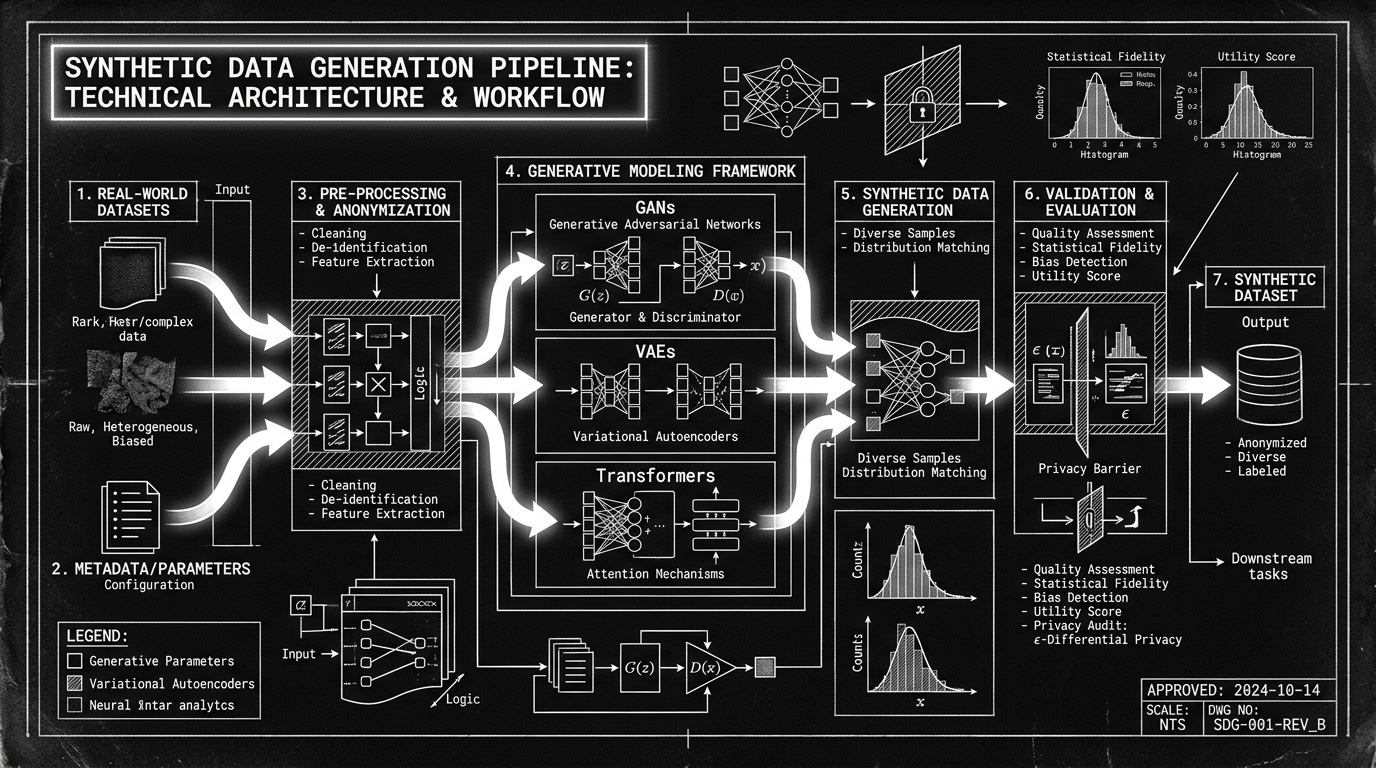
financial NLP converts unstructured text (news articles, earnings transcripts, SEC filings, tweets, analyst reports) into structured data that quantitative models can process. The basic pipeline involves four stages: text ingestion, preprocessing, analysis, and signal generation.
Text ingestion pulls content from newswires (Reuters, Dow Jones, AP), regulatory databases (SEC EDGAR, Companies House), social media APIs, and proprietary sources. Institutional platforms process millions of documents daily. Bloomberg's news feed alone publishes approximately 5,000 financial stories per day.
Preprocessing cleans and normalizes the text. Financial language presents unique challenges: "Apple" is both a fruit and a $3 trillion company. "Short" means something very different in a tailor's shop than on a trading desk. Named entity recognition (NER) models trained specifically on financial text identify companies, executives, financial instruments, and monetary values with accuracy rates exceeding 95% on benchmark datasets.
Analysis is where models extract meaning. Modern financial NLP operates across several dimensions: sentiment (positive/negative/neutral tone), topics (what subjects are discussed), events (mergers, earnings beats, regulatory actions), and entities (which companies and people are mentioned). The most advanced systems also perform causal reasoning, identifying whether a piece of news is likely to cause a price move versus simply reflecting one that has already occurred.
Signal generation translates analytical outputs into trading-relevant metrics. A composite sentiment score, combined with volume analysis and event classification, might produce a signal like: "AAPL sentiment shifted from +0.3 to -0.2 in the past 4 hours, driven by 17 news articles discussing supply chain disruptions in China, classified as a 'negative operational event' with historical average impact of -1.8% over 5 trading days."
The Institutional Toolkit
Three platforms dominate institutional financial NLP.
Bloomberg Terminal NLP. Bloomberg's terminal integrates natural language querying with its vast data ecosystem. Users can ask, "What are analysts saying about Tesla's margins?" and receive a synthesized answer pulled from broker research, news articles, and earnings transcripts. Bloomberg's proprietary BloombergGPT model, trained on decades of financial text, understands domain-specific terminology that general-purpose LLMs frequently misinterpret. The terminal costs approximately $25,000 per user per year, placing it firmly in the institutional category.
LSEG Machine Readable News. The London Stock Exchange Group (formerly Refinitiv, originally Reuters) offers machine-readable news feeds specifically formatted for algorithmic consumption. Each news item arrives with pre-tagged metadata: sentiment scores, relevance scores for individual securities, topic classifications, and novelty indicators (distinguishing genuinely new information from rehashed stories). Latency is critical; LSEG delivers machine-readable news within milliseconds of publication. Pricing is negotiated at the enterprise level, typically running $50,000 to $200,000 annually depending on coverage scope.
RavenPack. RavenPack specializes in converting unstructured news and social media into structured analytics for quantitative funds. Its platform processes over 200,000 documents daily across 20+ languages, generating real-time sentiment, event, and novelty scores for individual equities, currencies, and commodities. RavenPack's "Edge" platform, launched in 2025, adds LLM-powered analysis that goes beyond keyword matching to understand contextual meaning. A study by the company showed that trading strategies using RavenPack sentiment data generated Sharpe ratios 0.3 to 0.5 higher than identical strategies without sentiment inputs, on a backtested basis.
Earnings Call Analysis: The NLP Sweet Spot
Quarterly earnings calls are a rich target for NLP analysis because they combine scripted prepared remarks with unscripted Q&A sessions. The scripted portions reflect what management wants investors to hear; the Q&A reveals what they would prefer not to discuss.
Research published in the Review of Financial Studies demonstrated that linguistic features of earnings calls, specifically management's use of uncertain language, sentence complexity, and deviation from prior quarter scripts, predicted post-earnings stock price movements with statistical significance. Companies whose CEO used more uncertain language (words like "possibly," "uncertain," "challenging") during Q&A sessions underperformed those with confident language by an average of 1.2% over the subsequent 30 trading days.
Modern NLP models go further by analyzing vocal features when processing audio recordings. Pitch variation, speaking speed, and pause duration provide signals that text alone misses. A CEO who pauses for three seconds before answering a question about revenue guidance communicates something that the transcript does not capture.
Social Media and Alternative Text Sources
Social media NLP has evolved beyond simply counting positive and negative tweets. Current models weight signals by author credibility (institutional account vs. anonymous user), novelty (is this new information or a retweet of existing news?), volume dynamics (is discussion volume accelerating or decelerating?), and network effects (is the information spreading to new user communities?).
Reddit's r/wallstreetbets remains a monitored source following the 2021 GameStop episode, though its signal-to-noise ratio is low. More valuable for institutional purposes are specialized forums, Glassdoor employee reviews (which can signal internal company problems before they become public), patent filings, job postings, and government procurement databases.
The Estimize platform aggregates crowdsourced earnings estimates from thousands of buy-side analysts, independent researchers, and informed amateurs. NLP analysis of the comments accompanying these estimates (not just the numbers) has shown predictive value for earnings surprises, particularly in mid-cap stocks with sparse institutional coverage.
How Retail Traders Can Access NLP Tools
Retail traders cannot afford Bloomberg terminals or RavenPack subscriptions, but several accessible alternatives exist.
TradingView integrates basic sentiment indicators derived from social media and news analysis into its charting platform. The "Buzz" indicator tracks mention volume and sentiment for individual stocks, available on free and paid tiers.
StockTwits provides a social platform specifically for investors and traders, with community-generated sentiment indicators. Its API allows developers to build sentiment analysis into custom trading systems.
FinBERT and open-source models. FinBERT, a BERT model fine-tuned on financial text, is freely available on Hugging Face and can be deployed locally. With basic Python skills, a retail trader can build a custom news sentiment pipeline that processes RSS feeds and generates sentiment scores for a watchlist of stocks. The model achieves approximately 87% accuracy on financial sentiment classification benchmarks.
ChatGPT and Claude for ad-hoc analysis. General-purpose LLMs can analyze earnings transcripts, 10-K risk factors, and news articles when prompted correctly. While not as fast or automated as institutional tools, they provide retail investors with analytical capabilities that were unavailable at any price five years ago.
The Diminishing Edge
A key dynamic in financial NLP is the erosion of alpha over time. When sentiment analysis was novel in the early 2010s, simple positive/negative classification of news headlines generated meaningful trading edge. As adoption grew, that edge diminished because more participants trading on the same signals arbitraged the information into prices faster.
The competitive frontier has moved toward more sophisticated NLP applications: multi-document reasoning (synthesizing information across dozens of related articles), temporal analysis (how has the narrative around a company shifted over weeks or months?), and cross-language intelligence (detecting shifts in sentiment in Chinese or Japanese financial media before English-language outlets pick up the story).
The Infrastructure Behind the Innovation
For a deeper understanding of the underlying trends driving these shifts, consider exploring our comprehensive analysis on Can AI Replace Financial Analysts? A Data-Driven Look.
For institutional investors, NLP is no longer optional. It is a baseline capability that firms must possess to process the volume of information the market generates. The differentiation lies in the sophistication of the models, the uniqueness of the data sources, and the speed of the pipeline.
For retail investors, accessible NLP tools provide a meaningful upgrade to the traditional approach of manually reading news and earnings reports. The most practical starting point is using FinBERT or general-purpose LLMs to analyze earnings transcripts for stocks you already follow, identifying shifts in management tone and language that might not be apparent on a casual read.
The technology does not replace judgment. It compresses the time between information publication and informed decision, a narrowing that benefits disciplined, prepared investors the most.
How do algorithms read financial news?
Financial NLP converts unstructured text like news, earnings calls, and filings into structured data through four stages, text ingestion, preprocessing, analysis, and signal generation, producing sentiment, event, and entity scores that models trade on.
How much of institutional trading is driven by NLP signals?
NLP-derived signals from news and social media now influence an estimated 35% of U.S. institutional equity trades, according to McKinsey.
What NLP tools can retail traders actually use?
Retail traders can use TradingView's sentiment indicators, StockTwits, and free open-source models like FinBERT (about 87% accuracy on financial sentiment), plus general LLMs like ChatGPT or Claude for analyzing transcripts.
Does sentiment analysis still give traders an edge?
The edge from basic positive/negative sentiment scoring has largely eroded as adoption grew, pushing firms toward advanced techniques like event extraction, multi-document reasoning, and cross-language analysis.
Disclaimer: This article is for informational purposes only and does not constitute financial advice. Always consult a qualified financial advisor before making investment decisions.