

TL;DR
- The SEC has shifted from enforcement-first to rulemaking: After years of "regulation by enforcement," the Commission has proposed formal frameworks for crypto asset classification and exchange registration.
- Staking services face new compliance burdens: The SEC's proposed rules would require staking-as-a-service providers to register as securities intermediaries, reshaping how centralized platforms offer yield products.
- The US is playing catch-up to Europe's MiCA: The EU's Markets in Crypto-Assets regulation, fully effective since December 2024, provides a comprehensive blueprint that US policymakers are selectively adopting.
From Enforcement to Framework
The SEC's approach to cryptocurrency regulation has undergone a notable shift in 2026. Under the current administration, the Commission has moved from its prior strategy of suing individual projects and exchanges toward publishing formal rulemaking proposals that provide clearer compliance pathways.
In March 2026, the SEC issued a proposed rule defining a three-tier classification system for crypto assets: "digital commodities," "digital securities," and "hybrid instruments." Digital commodities, a category that would encompass Bitcoin and potentially Ethereum, would fall outside the SEC's direct purview and be regulated primarily by the CFTC. Digital securities, including most tokens raised through initial coin offerings, would remain subject to full securities law compliance.
The hybrid category is the most consequential innovation. It would apply to tokens that begin as securities (during fundraising) but transition to commodity status once a network achieves "sufficient decentralization," a concept the SEC first floated in 2018 through former director William Hinman's speech. The proposed rule attempts to quantify this threshold using metrics like validator count, token distribution, and the absence of a controlling entity.
Exchange Regulation Tightens
Centralized crypto exchanges operating in the United States face an increasingly structured regulatory environment. The SEC's proposed "Alternative Trading System for Digital Assets" framework would require exchanges to register under a modified ATS regime, separating custody, execution, and clearing functions that are currently bundled.
Coinbase, which settled its SEC lawsuit in late 2025 for $400 million without admitting wrongdoing, has positioned itself as a compliant venue by proactively separating its exchange and custody operations. Kraken followed a similar path after its own settlement. Smaller exchanges face existential pressure, as compliance costs under the new framework are estimated at $5 million to $15 million annually, according to a Chainalysis analysis.
The structural separation requirement mirrors traditional securities market architecture, where the New York Stock Exchange does not also serve as the custodian and clearinghouse. Proponents argue this reduces systemic risk, pointing to the FTX collapse as a case study in the dangers of vertical integration. Critics contend it will drive innovation offshore and disadvantage US platforms against less regulated competitors.
Staking Classification: The Next Battleground
The SEC's treatment of staking services represents one of the most consequential policy decisions for the crypto industry. In its 2023 action against Kraken, the Commission established the precedent that staking-as-a-service programs constitute unregistered securities offerings. The 2026 proposed rules formalize this position.
Under the new framework, any entity that pools user funds for staking and distributes rewards would be required to register as a broker-dealer or investment company. This applies to centralized exchanges offering staking products but explicitly exempts solo stakers and decentralized liquid staking protocols like Lido, provided they meet certain decentralization criteria.
The practical impact is significant. Coinbase's staking service, which manages over $10 billion in staked assets, would need to file periodic disclosure reports and maintain minimum capital requirements. Smaller platforms may exit the staking business entirely, concentrating market share among the largest, most well-capitalized operators.
Ethereum's proof-of-stake ecosystem is directly affected. Approximately 33 million ETH, worth over $100 billion at current prices, is staked across various providers. Any regulatory action that disrupts staking participation could weaken Ethereum's network security by reducing the number of active validators.
US vs. EU: Diverging Approaches
The European Union's Markets in Crypto-Assets (MiCA) regulation became fully effective in December 2024, giving Europe an 18-month head start over the US in establishing a comprehensive crypto regulatory framework. MiCA provides clear licensing categories for crypto asset service providers (CASPs), stablecoin issuers, and token offerings.
Key differences between the emerging US approach and MiCA include jurisdiction. MiCA applies a single regulatory framework across all 27 EU member states, while the US system fragments authority between the SEC, CFTC, FinCEN, and state regulators. MiCA requires stablecoin issuers to hold fully liquid reserves in regulated banks, a requirement that has already forced Tether to restructure its European operations.
On exchange regulation, MiCA's CASP licensing is broadly comparable to the SEC's proposed ATS framework but is simpler to navigate. European exchanges report that MiCA compliance costs approximately 40% less than anticipated US requirements, according to a PwC survey of digital asset firms.
The regulatory divergence creates arbitrage opportunities. Several US-founded crypto firms, including Ripple and Circle, have expanded their European operations to benefit from MiCA's clarity. Conversely, EU-based firms face barriers entering the US market due to the fragmented and still-evolving regulatory landscape.
Congressional Action and Bipartisan Momentum
Legislative efforts in Congress have gained bipartisan traction. The Financial Innovation and Technology for the 21st Century Act (FIT21), which passed the House in 2024, continues to advance through Senate negotiations. The bill would formally divide regulatory authority between the SEC and CFTC, codifying the commodity/security distinction that the SEC's rulemaking attempts to address administratively.
Stablecoin legislation has progressed further. The Clarity for Payment Stablecoins Act, which establishes federal licensing requirements for stablecoin issuers, passed committee markup in early 2026 and awaits a full Senate vote. The bill would require 1:1 reserve backing with high-quality liquid assets and mandate monthly attestation reports.
Industry lobbying expenditure has surged to match the regulatory moment. Crypto industry PACs and lobbying groups spent over $130 million on the 2024 election cycle, according to OpenSecrets data. This investment has translated into a more constructive dialogue between industry participants and legislators, though significant policy disagreements remain.
The Infrastructure Behind the Innovation
For a deeper understanding of the underlying trends driving these shifts, consider exploring our comprehensive analysis on AI Regulation in Finance: What the EU AI Act Means.
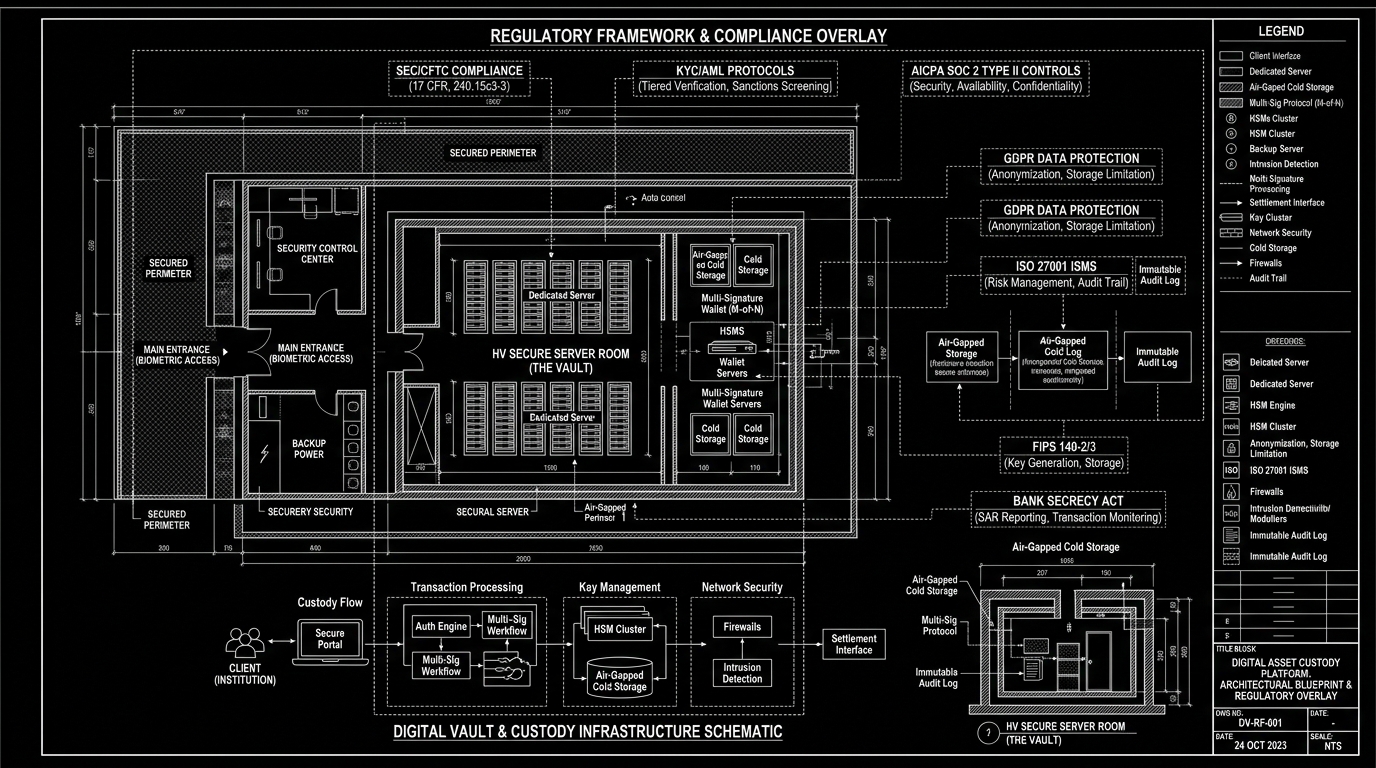
The regulatory trajectory in 2026 is net positive for institutional adoption, even as compliance costs rise. Clearer rules reduce legal ambiguity, which has been the primary barrier preventing large asset managers and banks from fully engaging with crypto markets.
Investors should monitor three key developments: the SEC's final rule on crypto asset classification (expected in late 2026), the Senate vote on stablecoin legislation, and any CFTC rulemaking that follows the passage of FIT21. Each of these milestones will reshape which tokens qualify as regulated investment products and which platforms can legally offer them.
The winners in this environment are well-capitalized, compliance-forward firms. Coinbase, Circle, and established financial institutions with crypto divisions are positioned to capture market share as smaller competitors are squeezed by regulatory costs. For retail investors, the transition period may limit access to certain tokens and services, but the long-term result should be a more transparent and trustworthy market.
How is the SEC regulating crypto in 2026?
The SEC has shifted from enforcement-first to formal rulemaking, proposing a three-tier classification of crypto assets, digital commodities, digital securities, and hybrid instruments, in March 2026.
How do the new SEC rules affect crypto staking?
Providers that pool user funds for staking would have to register as securities intermediaries, affecting exchanges like Coinbase (which stakes over $10 billion), while solo stakers and decentralized protocols like Lido are exempted.
How does US crypto regulation compare to Europe's MiCA?
The EU's MiCA has been fully effective since December 2024, giving Europe an 18-month head start with a single framework, whereas the US fragments authority across the SEC, CFTC, FinCEN, and state regulators.
Is crypto regulation good or bad for investors?
The 2026 trajectory is broadly net positive for institutional adoption because clearer rules reduce legal ambiguity, though compliance costs favor well-capitalized firms like Coinbase and Circle over smaller competitors.
Disclaimer: This article is for informational purposes only and does not constitute financial advice. Always consult a qualified financial advisor before making investment decisions.